

Open Access
The Company of Biologists recognises that there are many benefits to publishing scientific content Open Access. We have offered Open Access publishing options since 2004 and two of our five journals are fully Open Access.
It is clear that, as well was reader benefits, Open Access provides our authors with a wider readership and higher usage for their articles. Find out more about the benefits of Open Access publishing.
Authors can have various reasons to publish their work Open Access. Many authors prefer this route and actively choose it, while others do so because they are asked to publish their work Open Access by their funding bodies or institutions. We want to make sure that, whatever the reason or location, we offer our authors a choice of options that are compliant and easy to follow.
The Company of Biologists’ three hybrid journals – Development, Journal of Cell Science and Journal of Experimental Biology – are committed to Open Access growth, while continuing to provide publishing options that support all of our authors.
This helps us balance these two priorities:
- making research accessible to everyone, as quickly as possible
- supporting our whole author community – whatever their funder or financial status
We hope that authors, funders and librarians will join us on our Open Access journey.
Our Open Access journals
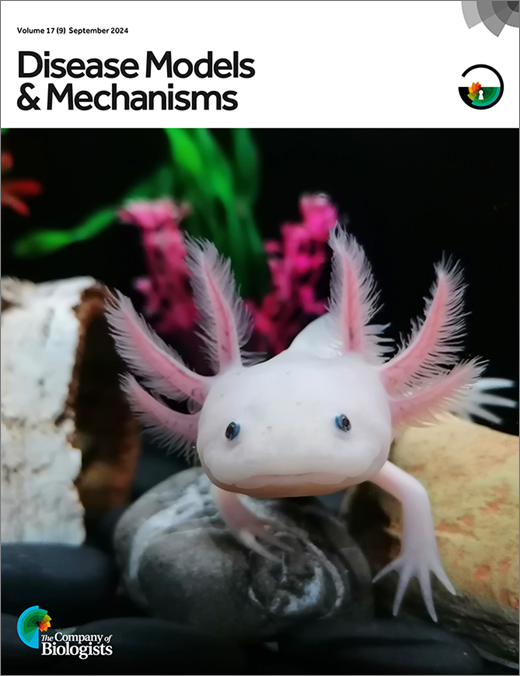
We publish two fully Open Access journals: Disease Models & Mechanisms and Biology Open. These journals are 100% Open Access, making your research easily and immediately available to everyone to read and share. Our fully Open Access journals are included in the majority of our Read & Publish agreements.
Both of these Open Access journals offer article processing charge waivers for corresponding authors based in low-income and lower-middle-income economies (as classified by the World Bank), as well as full waivers as part of our agreement with Electronic Information for Libraries (EIFL) . More information about Open Access fee waiver policies can be found on the Open Access pages of Disease Models & Mechanisms and Biology Open.
Our transformative journals
As hybrid journals, Development, Journal of Cell Science and Journal of Experimental Biology already offered Open Access publishing options. As transformative journals, we are working towards a greater percentage of Open Access content year on year. We promise to be transparent about all publishing options that we offer and about our pricing structure. We are actively working together with institutes through our Read & Publish initiative to offer authors worldwide a choice of publishing routes.
We have seen considerable growth in the percentage of Open Access content in all three of our transformative journals over the past few years, driven by our Read & Publish initiative.
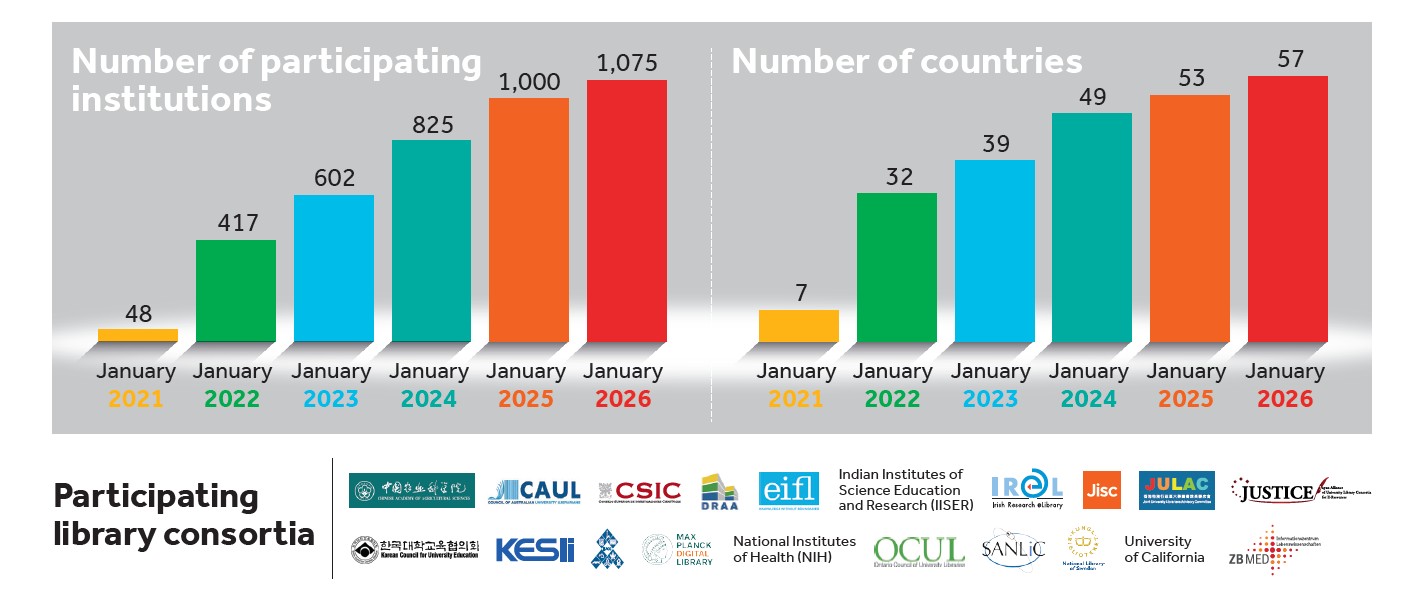
We look forward to continued Open Access growth, offering authors easy and compliant routes to publish with us.
What does this mean for authors?
Authors have a number of routes to publication in Development, Journal of Cell Science and Journal of Experimental Biology.
Free publication (not Open Access)
With this option, the author pays nothing at all. The article is available to our subscribers for 12 months and is then freely available to everyone after this time.
This option might appeal to authors whose funders and institutions do not mandate Open Access and authors who do not want to choose Open Access or pay an Open Access fee. This option could be important given the financial challenges within the university sector.
Open Access (author pays)
The author will pay an article processing charge (APC) to publish their article Open Access. Articles will be published under a CCBY licence and will be available to everyone immediately upon publication.
This option will appeal to authors whose funders or institutions mandate Open Access or to authors who prefer to publish Open Access.
Free Open Access through Read & Publish agreements
The third option is for authors whose institutions have taken up one of our Read & Publish agreements. These cost-neutral agreements, agreed with librarians, provide unlimited access to all of our content and allow corresponding authors from that institution unlimited APC-free Open Access publication for research articles. These agreements therefore support institutions and authors working to meet funding requirements and to make Open Access the default publishing choice. New Read & Publish agreements are added regularly and we have had overwhelmingly positive feedback from authors who have used this route.
Rights Retention Strategy
For authors who may need to follow the Rights Retention Strategy to comply with funder/institute mandates, we do allow this route to self-archiving of the Author Accepted Manuscript (in an institutional or subject repository immediately under a CC BY license) in cases where none of our standard routes (outlined above) comply with the relevant mandate.
Feedback from our authors
We have received overwhelmingly positive feedback from our authors, as they are able to choose the publishing option that best suits their needs. Read & Publish agreements specifically have made a big difference for authors at participating institutions, allowing them to publish their research Open Access, when they might not otherwise have had the opportunity to do so. Below is a selection of recent feedback. You can find out more on our page What authors say.
Assistant Professor Khursheed Iqbal, Oklahoma State University, USA
“The free Open Access option proved the optimal choice, not just by simplifying the process but also by granting us publication in a prestigious journal like Development, all without the usual financial burden. This is truly a game-changer for science publishing. This sets a powerful precedent for a more equitable and accessible scientific publishing landscape. I hope more journals adopt this model, paving the way for a future where Open Access becomes the norm.”
Professor Doug Winton, CRUK Cambridge Institute, University of Cambridge, UK
“We were delighted that The Company of Biologists has a Read & Publish agreement with the University of Cambridge. Such agreements are fundamental to the culture of Open Access without financial burden. It’s great to see agreements in place which include less-established institutions and researchers and ensure better access to publishing across the globe.”
Jessica Tingle, The University of Akron, USA
“For the second time, I find myself very thankful for the agreement between The Company of Biologists and The University of Akron. I very much favor publishing my articles Open Access, but as a post-doc with limited funds, I can’t pay for high APCs. The Read & Publish agreement has twice given me the opportunity of APC-free Open Access!”
You must be logged in to post a comment.